- ISCOWP E-newsletters
Balabhadra Das (William E. Dove), president and cofounder of the International Society for Cow Protection (ISCOWP), passed away pe...

Thanks to your generosity, $ 9,046.61 has been donated to the Feed the Cows Campaign, which has a goal of $18,750.00! In addition, your donation will be matched up to $25,000.00 by an anonymous donor! Then there is the Karmic benefit of giving in charity to the cows. So, take advantage of this moment to double your donation for the cows and experience the blissful, peaceful feeling that we all receive when giving in charity. Thank you, thank you!
It takes about 250 bales of hay at $18,750.00 to feed the ISCOWP herd of 22 cows for one year. Each hay bale weighs approximately 800 pounds, costs $75.00 a bale, and will feed the ISCOWP herd for one day. An anonymous ISCOWP supporter will match up to $25,000.00!
You can help purchase hay for the ISCOWP herd for a day, a week, or a month.
One bale costs $75.
$75 to feed the herd of 23 cows for a day
$525 to feed the herd of 23 cows for a week
$2,100 to feed the cows for a month
Or you can donate whatever you can.
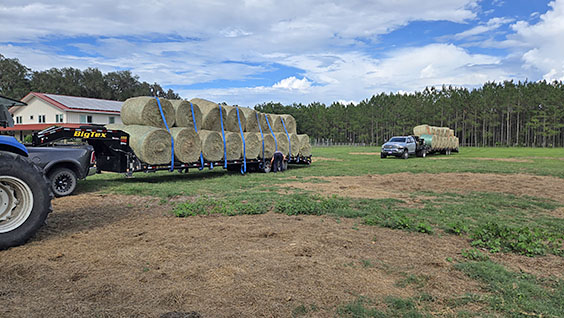
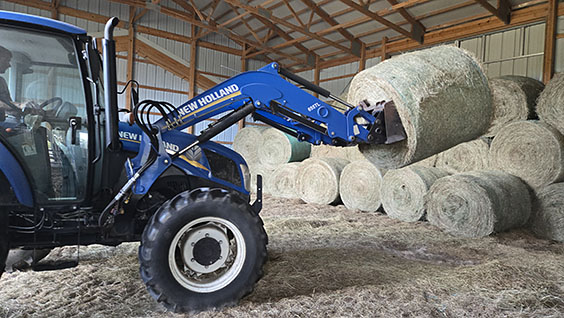
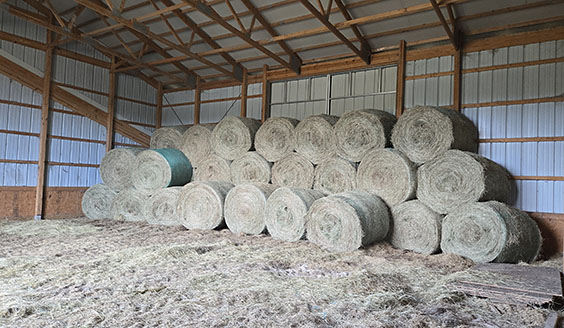
Whatever amount you can donate is significant in helping to fill the barn with hay for the cows. We sincerely appreciate your generosity. Thank you and bless you!
President Trump announced that the U.S. would reimpose a blockade on Iranian shipping. The blockade went into effect on Tuesday, July 13, at 4 p.m. ET. The move follows renewed U.S. and Iranian strikes that have pushed last month’s ceasefire closer to collapse.
The Strait of Hormuz is effectively closed to most international shipping, with only limited selective transit allowed for certain nations. Overall traffic remains at roughly 10% of normal levels, with only about 48 weekly transits compared to 966 under normal conditions. Multiple attacks on commercial ships and the laying of sea mines have further restricted navigation. Oil prices have surged, with Brent crude reaching $144 per barrel as of the latest reports. The blockade also affects fertilizer exports and other commodities that transit the Persian Gulf.
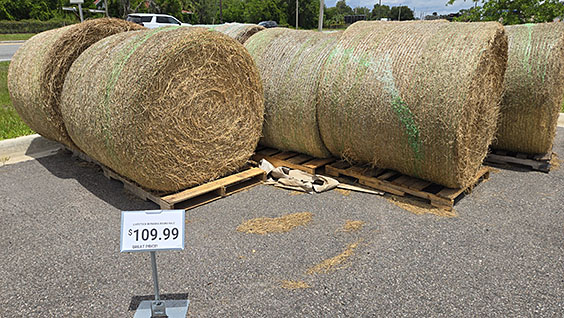
The result for cow protectors is more expensive hay and less hay available. Thus, we are filling our barn to stockpile hay for this winter and beyond. Our supplier has not increased his hay price. He stockpiled fertilizer when the price was not as high as it is now.
This month brought typical summer rains in North Central Florida, and the grass began to grow. We are now officially out of the burn ban and can burn organic debris. However, we are experiencing abnormally dry conditions (DO). This means the region is not yet in active drought, but dryness is present and could be developing. There really wasn’t enough rain to soak the earth, and the temperatures have been in the 100s.
Daily, we watch the conditions. This weather change is not just in North Central Florida. Extreme weather conditions are developing in various locations around the planet. This change has been labeled Climate Change, and there are many contributing factors. One is beef farming.
Raising cows for meat can be really water intensive, though a lot of that depends on what they eat. Cows in the US for example—whose diet requires water from reservoirs, rivers, and other “blue water” sources—typically have a larger water footprint than those in countries like the UK, whose cows mostly eat grass that is watered by rain.
According to one estimate, one pound of US-produced beef uses about 1,800 gallons of water. Water is used every step of the way—for the cows to drink, to grow feed, and to wash the slaughterhouse after they’re killed.
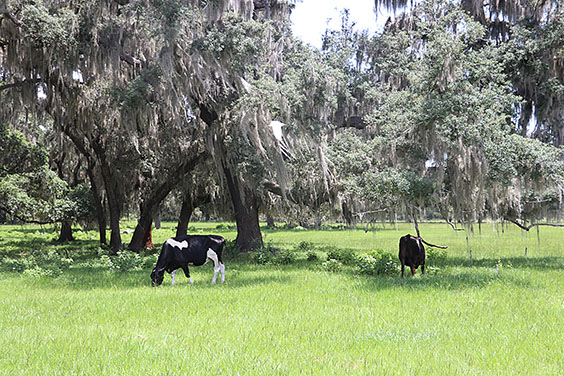
Raising cows uses a lot more blue water, often because the animals are fed extremely thirsty crops like alfalfa. In the US, where more feed is grown using irrigation rather than rainwater, a pound of beef can require around 240 gallons. Some farming systems can use as much as 1,800 gallons per pound of beef, while other areas where high volumes of blue water are used for cows, such as California and Florida, are also experiencing ongoing droughts.